
April 23, 2023
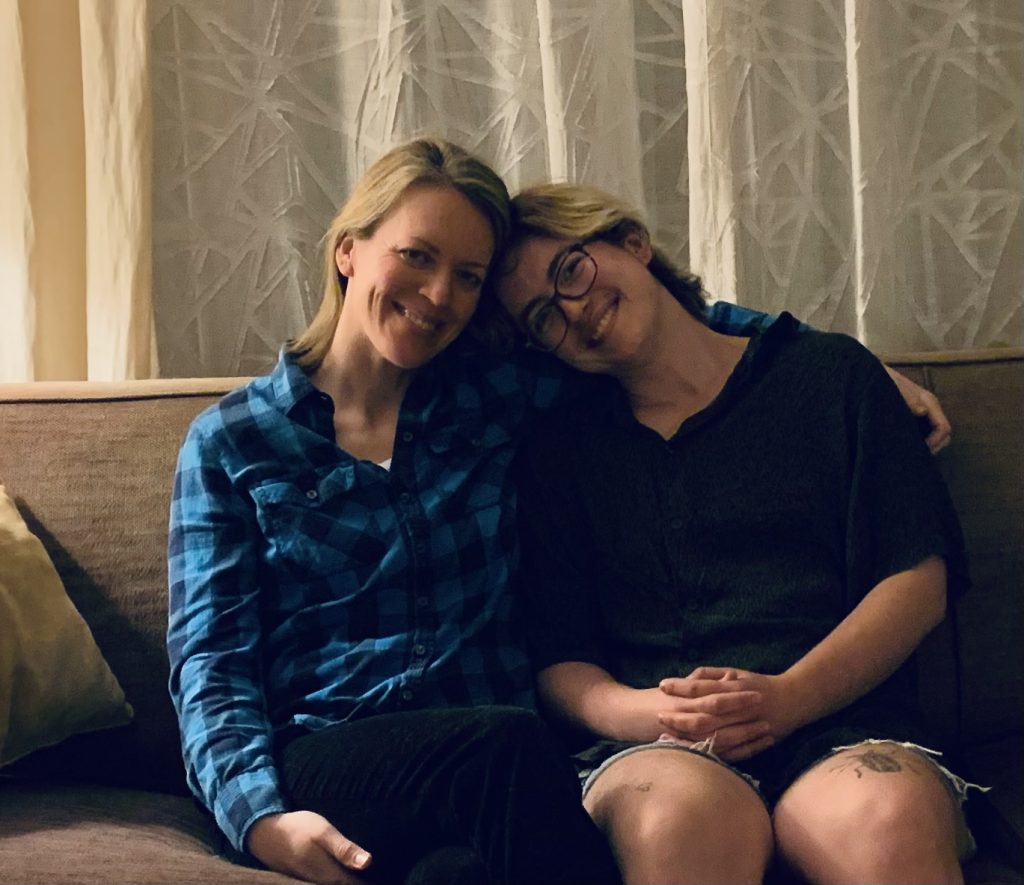
Kalyn: Welcome to Bessa’s Story “Behind the Scenes,” starring my mom, the creator of this podcast, and me, Kalyn, the sound engineer for the podcast. We are just gonna go over some of the things we did behind the scenes to make this a really beautiful, well put together podcast.
Kristen: I’m so excited to have this conversation with you, to talk about the podcast and to talk about – who knows what we’re gonna talk about?
Kalyn: Who knows? It’s gonna be a fun journey today. I have so many things to say. I know you have a lot of things to say.
Why Bessa’s Story was created (1 min-2:27)
Kalyn: I guess I just wanted to start first and I just wanted to hear – what were your intentions with creating this?
Kristen: My intentions were to get Bessa’s story out to the world, which was something that she wanted me to do ever since I was a kid I remember her talking about it.
Kalyn: Ever since you were a kid?
Kristen: Yeah. It’s something that’s been on my mind for years. I wanted to get it out there and I wanted it to be in a format that would be easy for people to access – people in our family. Or anybody who might want to hear her story, but mainly family. That’s who I was thinking about first.
Kalyn: Yeah. I mean, I feel like there’s so many different ways that you can remember family and cherish them and, you know, there’s pictures. Pictures are one of them, like videos. I mean, that’s sort of how it is now. Letters, but you never really get to hear someone’s voice again after they pass away.
And that was just such a special – when you first started with this. I mean, you’d only played me a few voicemails from Bessa before this, you know, just saying, Hi Kristen, hope you’re doing well. It’s Bessa. You know, stuff like that. But I never got to hear her storytelling voice. Because she had such a, like a cadence to her words that just carry you along through whatever she’s talking about.
Kristen: Yeah. She really did.
Editing challenges & sharing personal details (2:28-8:51)
Kalyn: So – what were some initial challenges that you faced when you were making this? They’re like technical challenges, personal challenges. Start with whatever one that was most daunting to you.
Kristen: Yeah. Well, I had 10 hours of recordings to sift through and I initially thought I was going to transcribe each of them on my own. And then I discovered transcription software that helped me out a lot. So that helped me kind of not be so overwhelmed by that. But I still had to clean all of them up.
Kalyn: Yep.
Kristen: And I still had to go through and find the gold that was in each of those recordings. And figure out what I wanted to do with it. How much of it I wanted to share.
Kalyn: Right. Because I’m sure there was a lot of like, actually like very personal details that you couldn’t really tell everyone about because you’re putting this out – the world can listen to this, you know, the world isn’t, not everyone is listening, but there are a lot of things that you have to choose to cut out.
I know that you really struggled, like specifically with just like talking about the interpersonal struggles within the family because it’s family. And you don’t wanna, you know, speak ill upon living or dead. So I’m sure that was really tricky because it’s about Bessa, but Bessa was about, I feel like one of the things Bessa was – one of her core beliefs and like a part of her identity is like, she was about everyone.
You know, this podcast is about Bessa. She was about everyone. Everyone in her life. She was like, I mean, not to sound like, you know, she was like literally a bright light in everyone’s lives. And everyone was like, That’s Bessa. So making a podcast specifically about her is really special.
Was it hard getting her to talk about all of that? Like, was she, was she just an open book? Did you have to have a lot of leading questions?
Kristen: I think that she was pretty open with me. She trusted me. And so she wanted to get it out in the world. And this was something that, and I touched on this in in the recording in the, in the podcast, was that in her, from her upbringing, you didn’t, didn’t talk about things that – you didn’t share things, right? And you didn’t air out your dirty laundry or whatever.
Kalyn: No, yeah. In the finale when she was talking to Torfinn about like problems and like, there’s like certain – there was a certain shame about bringing those things up.
Kristen: Right. Exactly. Exactly. And there were a lot of things that, that she never learned about, like sex.
Kalyn: Yeah, oh my God.
Kristen: How babies came into the world. So she came from that. And she also endured a lot of trauma and a lot of, just a lot. And so for her to come forward and share about her life, I think that took so much.
Kalyn: Yeah. Right.
Kristen: I’m so proud of her for doing that.
Kalyn: Yeah.
Kristen: What she shared with me was – she, she trusted me to, to do, she trusted me with her story.
Kalyn: Yeah. It was her voice that she was giving to you.
Kristen: Yes. And I took that very seriously.
I was constantly thinking about family and like you said, living or not living. I was thinking about how, what she was sharing if it affected somebody else or if it portrayed somebody else in a certain way. I, I wrestled with that.
I wrestled with, you know, the challenges that she had with Torfinn and putting that out there. And I was, I was very careful with what went in there. Because she was very honest with me, but certain things weren’t relevant to her story. But at the same time, I didn’t want to filter out certain things.
Kalyn: Yeah. I mean, because Bessa was unfiltered.
Kristen: Exactly. She – that’s the other thing is that there were a lot of, I know I shared outtakes, but there were a lot of outtakes that we can’t ever publish because – just because they’re not appropriate.
Kalyn: <laughs>
Kristen: Right? So – not politically correct. Not appropriate. Maybe, you know, that’s just how she was – not ever mean.
Kalyn: No, no, never.
Kristen: But, but just anyone who knows Bessa knows that she spoke her mind.
Kalyn: Exactly.
Kristen: And so I did wanna honor that.
Kalyn: Of course.
Kristen: So I tried to err on the side of revealing a little more than I was comfortable with, because for me, I am very cautious. I’m very careful in the words that I use and what I put out there. I’m pretty careful about that. So I was trying to strike that balance.
Kalyn: Yeah. That sounds quite difficult. And I feel like you did. Well I know you did a really good job of that because listening to the podcast, it was like, I don’t know, it, it seemed like the perfect amount of, you know, learning about Bessa, but also getting to spend time with her. Because it was, you know, you could hear her – the clinking of the coffee cup.
Working with less-than-perfect audio (8:52-12:39)
Kristen: Yeah. Well, that’s another challenge actually, was that when we recorded, I think we thought it might be a book.
Kalyn: Oh!
Kristen: And so, actually our first times sitting together, I didn’t record on an audio recorder, I just took notes.
Kalyn: Oh wow.
Kristen: And at some point I bought that little recorder and to, so that I could focus more on her when we were talking. And not have to try to jot down every single note. That’s why I started recording. So, but I know that she was, I do know from certain conversations that she was good with me sharing that. So since I wasn’t gonna use it in, since I wasn’t planning on using it in the podcast, I had the dishwasher running during our conversations…
Kalyn: Yeah.
Kristen: I didn’t have a mic for myself. I was far away from that microphone. She was close. Because of that I had to do a lot of cleanup and even a lot of it couldn’t be fixed. So I tried to do the best I can to make it so people could hear what we were saying.
But I do think that if I had to do it again, which I can’t, I probably wouldn’t do it very much differently because I think having that little recorder next to her, she wasn’t thinking about it. Because it wasn’t like a big setup. It was just there and we kind of forgot about it. And also, I kind of like that I didn’t know that my voice was gonna be ever used. So I think that I would’ve, maybe I would’ve sounded different.
Kalyn: No. Because, you just said you’re very careful with your words.
Kristen: Exactly. Yes. Right. So I think that it was, it was actually a very natural conversation. Even though the audio wasn’t perfect.
Kalyn: Actually, I really liked that part of the whole podcast. I really liked how the audio wasn’t perfect. because I don’t wanna, like – I mean, you know, if you think about it, every single part of, you know, I would say this is art. This is art because you are making something, and it’s yours and there’s a product and it’s very creative. You’re very creative with this.
But with the podcast, with the audio not being perfect, honestly, it just sort of creates this very comfortable environment. And Bessa was very honest about how, you know, she was not perfect and – You know, she, her life was not perfect.
The finale, you asked her about, you know, what, what was the easiest part of her life? And she said, none of my – There were no parts of my life that have been easy. So, you know, that audio where she’s talking, it’s just very raw and I think that’s what people needed to hear.
Kristen: Yeah. I think you’re right. Well, I always prefer for a project that I’m working on to be a really nice, beautiful, perfect. As perfect as possible product. So I had to let go a little bit of that and also think, well, what would Bessa think of this?
Podcasting skills & how transcripts can help (12:40-15:31)
Kalyn: Right. Right. And I actually, I was gonna ask you something because you have experience with podcasts, writing podcasts and editing them. I remember listening to some of the recordings of these doctors talking and learning about all these different medical conditions and stuff. But I was gonna ask about – How was your approach different to this podcast compared to the podcast that you were making for work?
Kristen: Completely.
Kalyn: Completely. Like in what way? Go into it.
Kristen: Yeah. Well this is, this is sharing a story.
Kalyn: Yeah.
Kristen: A big story.
Kalyn: It is.
Kristen: And the podcast that I worked on a long time ago, most of those episodes were informational. They were Q+A. And it was, that was focused on getting clear and easy to understand information out to patients. And this was about sharing stories from Bessa’s life.
Kalyn: Yeah.
Kristen: So, completely different.
Kalyn: Were there any sort of skills or techniques that you took from that professional side of podcasting into the more creative type of podcasting?
Kristen: Yeah, that’s a good question. I think I definitely did. I knew that transcribing the audio before editing was the way to go. Because I used those transcripts to edit from. And so I took the transcripts and went through and highlighted all of the parts that I wanted to use in an episode.
So once I had that in the Word document, that’s way easier for me to edit from that than to try to listen to the tape to find all of those good things. I mean, you still have to do that, but starting from that saved time, it also helped me wrap my head around what I was working with.
Kalyn: Right. I mean, it gives you, it gives you a visual sense of how you’re gonna put this together.
Kristen: Yes. It helps a lot.
Kalyn: Yeah. I wish I knew that, because I did a short podcast episode for school once and I edited it by just listening to the audio and I cut it out where I didn’t like.
Kristen: That works though.
Efficiency & Time Management (15:32-23:53
Kalyn: It does. It does. Oh – now that we’re talking about like saving time, what were some other techniques that you learned during this podcast that really helped you with, I guess, efficiency and, what were things that you learned that just made it easier as you went along?
Because being here since the first episode, there’s, you know, the first episode that you sent me, there were a lot of things that I had to say about it in terms of editing and then as the episodes progressed, there were just fewer and fewer things I had to say. Because you just, you got onto these things that just made you, it made it really smooth for you, I feel like.
Kristen: Yeah. That surprised me. I wasn’t expecting that I would get better at this as the project went on. And it was really cool to notice that. The first few episodes took me a long time to edit.
And the narration took me so long because I felt so awkward. I also had trouble just making myself – the, the sound – like I had trouble finding – because I’m doing this at home. I don’t have a studio.
So it was just hard to get, it was hard to figure out my setup, like where I should be because the first, the first several recordings I did, they sounded really echoey or they just, certain things that just weren’t right. And so, once I had that set up and then once I just kind of found my voice –
Kalyn: Yes.
Kristen: Then I knew I could record sometimes in one take. I learned a lot, like, don’t record my narration at night. Because I sounded slower,
Kalyn: Yeah.
Kristen: And quieter. And same thing in the morning. Don’t record in the morning.
Kalyn: Your voice is all like –
Kristen: Because it was not good. So there’s like a, a certain time that I knew, um, where I was still awake enough and I would sound the way I wanted to. So, things like that. But I think ultimately, and then editing, I got faster and faster and that was helpful because I don’t have a lot of time.
Kalyn: Yeah. I was about to say, that sounds like a lot of stuff you have to do for what, a seven-minute podcast episode. And I was wondering like, how did you do that? And you work a full-time job, and you make dinner, and you clean the house, and you still have time to take care of yourself.
Kristen: Yeah.
Kalyn: I’m sure that was a learning process as well.
Kristen: I was very organized. I made use of my early mornings – and so early mornings might have been writing or planning the next episode.
Kalyn: Yeah.
Kristen: Evenings. So I just figured out a rhythm with that, and weekends. So I was very strategic and, I think the work that I did over the summer to sort through the transcripts and come up with a plan for – like the outline. So I outlined the story and kind of how that would look with each episode. Just not very detailed, but that helped me to, that helped me to have that in the back of my mind as I was going through.
Kalyn: Yes.
Kristen: So doing that work – doing all of that saved me time because I had a plan going into it.
Kalyn: Yeah.
Kristen: Yeah. So I think it’s interesting, when you’ve got something that is gonna take a lot of your time.
Kalyn: Yes.
Kristen: It’s a challenge, but I – this was something I wanted to do. And this is something I really needed to do.
Kalyn: Needed. Yes.
Kristen: Because this was so important to me, I made time to do it.
Kalyn: Of course.
Kristen: And I also knew that it was a short-term thing. Like it wasn’t gonna be the next 10 years of my life doing this. It was really just a few months. And so that helped me to sort of push through when I was getting tired and burned out a little bit.
Kalyn: Yeah. I mean, you say it was a few months, but you churned out what, 20 episodes? 24 episodes? Um, you know, once a week. And you released it on Thursdays. So, I mean, when you, when you’re under that time constraint, you have to like pick and choose certain things to do.
Kristen: Yeah.
Kalyn: So, how did you, I mean, you were, I’m sure you were very organized and you had steps with making each podcast because you only had like a week. Did you, were there times where you got ahead and you planned it out more? Like what was your, what did that look like for you?
Kristen: Yeah. Going into it, I thought I was gonna work two episodes ahead, at least.
Kalyn: Yeah.
Kristen: So I’d have some in the bank. I did not do that.
Kalyn: No. <laughs>
Kristen: I also thought I was going to, I thought I was going to batch record, so I had this idea that I was gonna have everything all written out and planned and then I would just record like three episodes at a time for some reason. I did not do that. I did always have the next episode in mind.
Kalyn: Yes.
Kristen: Because, and I always had the end in mind. Like I always had the plan in the back of my mind. And, but every week was really just, I mean, when I published it Thursday, I mean, you know this, when I published Thursday morning, I was usually finalizing it Tuesday or Wednesday.
Kalyn: Yes. I know. I would be at work – you know, 7:00 PM at work. I would get the text from you. The Google Drive link. Um, and I’d be like, How, how are you doing this? Because you send me the rough draft Wednesday. I’m like, you’re crazy <laughs>. You’re a little crazy.
Kristen: <laughs>. I know.
I knew that this was more that I could handle. But it was, it was fine. I felt like Bessa was with me. And she gave me strength to do it. And it felt, it felt really great. So even though I was tired when I had to stay up late, I actually feel I’ve, I’ve felt more energized from doing this.
Kalyn: Yeah.
Kristen: So that’s like, one of the great things about doing a creative project is, is how it, how it can really make you feel alive.
Kalyn: Yeah, yeah. Exactly. Following your passion.
Kristen: Yes. And so I think, and, and then even professionally, I think that this actually benefited me professionally in my day job because I was so kind of fired up about this that I took that into my work.
Kalyn: Yeah.
Kristen: And so, yeah. I think all in all, I am relieved that that it’s, it’s done <laughs>.
Kalyn: Yes.
Lessons from Bessa’s life (23:53-31:27)
Kristen: So I wanna ask you a little bit about things that, because you have a full life and you made time to review all the episodes and deal with me texting you at random hours. And so I’m wondering about, well, I guess first did you learn some things about Bessa that you weren’t expecting?
Kalyn: I learned quite a bit because I think, I don’t think she told me any of the things that she told you. Maybe she, cause I don’t remember if she told me about the submarine, the war ship that came in. I don’t know if she told me about that. I don’t know if she told me about the turnip and those were like, I know those were the first two stories I knew about Bessa, you know, before this podcast.
I mean, from those alone, I already knew that Bessa was just a badass and really just didn’t take anything from anyone. She was just her own person. But from this podcast, all the stories that you told me or told us, I learned that she knew how to keep going.
She just kept going. And there were, I’m sure it was like this for a lot of the listeners. It’s just everything she went through and she just kept pushing was really inspiring to me.
I don’t think that Bessa really focused on the past when she was living, you know, each day when she was 18, 45, 80, any of that. She just took everything that she went through in stride and learned from it. And rather than saying, Well, this is it, you know, It’s never gonna get better. She said, Well, this happened. I learned that literally anything can happen to you and you can still be happy, and you can still have people love you, and you can find meaning from life. You know, anything can happen to you. And also learning, also learning that yes, anything can happen to you. You cannot expect your life to look a certain way. So, and you have to be ready for it. And Bessa was always ready.
Kristen: Yeah. Great, great lessons.
Kalyn: Yeah. I think also on that note, I learned a lot personally from “Grieving,” which goes over, the death of Tante Inger, I, when that episode came out, which was what, a month ago, that is exactly what I needed to hear. From, from hearing what Grandma said, hearing what Bessa said, cuz she was 23, I’m 21.
And as someone who struggles with a lot of, sort of mental health-related struggles, mental illness, it’s really easy to get caught up in that. And just, you know, I wanna say this in, not in a bad way, but it’s, when you’re struggling with things that make you feel bad all the time, it’s easy to think, everything around me is bad and there’s really no reason to feel happy.
There’s, I don’t deserve to be happy. You know, we can go all into all this, but you know, at a month ago I was really struggling with a lot of these really difficult things. And hearing that story about Tante Inger made me realize that I am 21 and there is actually so much life ahead of me.
A lot of people, you know, really care about me and they really do wanna see the best for me. Of course. So, I don’t know, I guess I just wanted to say that I think every, every single episode Bessa had something that I needed to hear. Yeah. And she always had something that like anyone needed to hear. You could always get something out of a conversation with Bessa.
Kristen: Yeah. Thank you.
Kalyn: Yeah.
Kristen: That particular episode, grieving that was so hard to make. Yeah. That was so hard. I, leading up to that I wrestled with, do I even put this out there?
Kalyn: Yeah.
Kristen: It was part of her life. So it – Yeah. It needed to be.
Kalyn: Yes.
Kristen: But it felt so personal and just so, so terrible. Yeah. So, but what’s interesting, I think on a lighter note is that I definitely learned a lot while we were recording. That was years ago.
Kalyn: When did you start recording?
Kristen: Well, it was like 10 years ago that we started.
Kalyn: Oh my gosh.
Kristen: So it was a long time ago. But I think that one thing I was surprised about was that editing this podcast, I learned more about her. Mm. Because I wasn’t in that role. I wasn’t sitting there and listening to her and being there for her or having a conversation with her. It was purely her in my ears and me editing these episodes. So I picked up on things and I noticed things that I didn’t notice when we were having the conversation.
Kalyn: Yeah, because I think, you know, during a conversation there is, I also wanna ask this, ask about this after this question or this comment, but, you know, in a conversation, it’s, it’s two people, two-sided. You’re having your own thoughts about what’s going on and you’re feeling a lot for her trying to understand, just listening to her, but, once you start editing, it’s, it’s just one person. Yeah. And you’re just getting facts thrown into your ears.
Hearing Bessa’s voice again (31:27-33:37)
Kalyn: And I wanted to ask you like, how was that having her in your ears?
Kristen: It was wonderful.
Kalyn: Yeah.
Kristen: It was like she was with me. It was funny sometimes because I would hear her stomach gurgling, or other noises that I would cut out. Yes. But it wasn’t just her voice. It was like, you know the noises with her ring or she’s sipping her coffee or shifting around and, and so having that, having those sounds in my ears, it was incredible.
Kalyn: Yeah.
Kristen: I’ve been really used to having her there. The last few months. And, and I know I’m gonna really miss her. It’s been so special to get to do this and to kind of visit with her again.
Kalyn: Yeah.
Kristen: So, I mean, I’ll have the tapes forever of course, but this, going through this creative project, it was amazing. Yeah.
Kalyn: Yeah. It was, I mean, the first, very first episode, hearing her just like, just talk, it just made me cry. Every episode you sent me, I’d start crying and I’d tell you I’m crying right now, <laughs>.
Kristen: I know. I, yeah. I’ve had some family members who can’t listen to it. And so, some people read it and it is hard. It is hard to, it’s not something that we naturally can do, right? To hear somebody who’s passed away.
Kalyn: No, I know. It’s, it’s amazing. It’s incredible that this is, this is out there.
Favorite episodes (33:37-36:51)
Kristen: Yeah. Well, let’s, how about if we shift gears and think about maybe the episode that you enjoyed the most?
Kalyn: Okay.
Kristen: Let’s, what if we talk about, maybe like your favorite episode or my favorite episode?
Kalyn: Okay. Well, I wanna hear yours.
Kristen: Yeah. Okay. So definitely “On the Ship to America.”
Kalyn: Oh yeah.
Kristen: I loved that one. I loved putting it together. I had a lot of fun with it.
Kalyn: Yeah. Oh, that was so funny. That was so funny. Yeah.
Kristen: Yes. But then also like the birthday scene. And then when she, when they came into New York, it was just the most magical trip.
Kalyn: No, it felt like, no, when she got to New York, I was like, it felt like I was going to New York <laughs>.
Kristen: That’s awesome. Yeah. What, what about you? Like, what episodes stand out to you?
Kalyn: I liked “Sweet,” because it was just like, it was a sweet episode and it was just like, it showed like a very – I mean, Bessa, she always had a lot of like, childlike energy. She, you know, she was young, but hearing her from a time where she was just being a kid. Because before that she was, you know, there was an invasion. She had to live with Nazis. You know, she got threatened by a soldier. Yeah. So hearing that after, you know, the first four episodes, it’s like she’s, you know, she’s making caramel and she’s, she’s hanging out with Borgny. Yeah.
Kristen: Yeah. It was like a relief.
Kalyn: Right. It was.
Kristen: So she could get to be a kid throughout that.
Kalyn: Yes. I also really liked “A Special Hairdo.” I loved, I really, really loved hearing about her time at the Danish Club and Magnotti’s. I think because I heard, I just heard so much about it when she was alive.. Just like in passing, you know, people talking about the Danish Club and I’d be like, what is that? Like, what was she, what was she doing? And I found out what she was doing, and the whole thing about her hair was just so cool to me because her hair was always something, I knew her by when she was, you know, when she was older. So she’s, she’s always had that hair.
Kristen: I know. But it’s like, I think of her hair as such a symbol of, of how she went all out with things. And how she wasn’t just like, oh, I’m just gonna, like, for me, I’ll just throw my hair in a ponytail. Or just, not think about not those details maybe. But she cared about herself and when there was a special occasion, she really celebrated and she really did it up. So I think that’s a really good lesson.
Kalyn: Yes. Yeah. She always, she embraced life.
Collaborating (36:52-41:28)
Kristen: Okay. I want to thank you for being there and spending time Yeah. On this whole adventure. Yes. I’m so glad that you were here. I mean, you were really the main person who I could talk to about these things. That’s been really fun for me to get to talk to you about these things that you’re an expert in and and – so I wanna thank you. I think that we should do something – I think we need to do something after this.
Kalyn: No, I was about to say like, I learned that we are, we work well together. And that – I don’t know. It was, it was very easy to work with you because it was just like, I don’t know, it was easy working with you and, uh, I was thinking about this before I came over here.
I was just thinking about our, the things that we’re passionate about and our roles. And we both really like – I think we’re both really invested in the behind the scenes, like controlling whatever sort of thing we’re putting out. We both definitely have that like, detail-oriented mindset, and determined and always just striving to do better with our passions.
Kristen: I wonder where we got that from. <laughs>.
Kalyn: I don’t know. <laughs>, I don’t know. I guess we’ll have to listen to a podcast called Bessa’s Story.
Kristen: <laughs> I want everyone to know that Kalyn has a very bright future in the world of sound. And Kalyn dj’s at a college radio station and interns at a
Kalyn: – recording studio.
Kristen: Recording studio. You’ve studied music for
Kalyn: Too long –
Kristen: More than half your life.
Kalyn: Yeah.
Kristen: Do you want to share what you see yourself doing?
Kalyn: Yeah. Well, I, helping you with this podcast helped me realize that, you know, I, I just love sound. I just love, I love media and I love – cause I love performance. And I love just, it sounds bad, but I love controlling a narrative, you know? And it doesn’t have to be like I’m controlling. It’s like I love presenting a narrative. I love adding to a narrative. You know, cuz we both really like creating and you added your own style to it. You added your own voice to it and so that’s what I wanna do.
And it was really cool seeing you do this and working with you on this cause I don’t know, like, with this podcast and also just completely random, like you learning how to play guitar, you know, you’re doing these things for yourself. And I first, I mean, as I’m getting older, I’ve started noticing you do a lot more things for yourself. And it’s very inspiring to me. And I am also very proud of you because you’re pursuing these things that make you happy. Even though you have a lot of stuff going on and you’re like Bessa, you’re just always working to add more to your life and you gotta stay busy. Yeah.
Kristen: Thank you. Well, I’m really proud of you too.
Kalyn: Thank you.
Kristen: This, I mean, this brings me a lot of joy. Yeah. So, so it’s, it’s fun.
Staying motivated to complete a project (41:28-45:16)
Kalyn: Yes. Yes. Even though there’s times where you wanna sit and just punch the computer. That’s how I feel because I’m, I’m doing the same thing with my music. Just like going back and editing it and just listening to myself and cringing and just getting very frustrated. But it’ll, it’s all worth it in the end. And seeing this being completed is inspiring me to complete mine and you know, just put out a product.
Kristen: Yeah. I think that if you can have a product where there’s – this is a word that they use at work, delivering incremental value where, so like, if you can have a project where, or a product where you can get, like with the podcast where you have episode after episode. So it’s like you’re completing it a little bit at a time, and maybe that’s like the same with an album, but maybe not.
Kalyn: No, yeah, no, it is, it is. You’re completing just a little bit at a time and you can bring it, break it down to as small as you want.
You know, I was, there was literally, I was working on this today where I was – I was listening to the song play through and I heard the bass come in a little bit early on one beat, just literally just one part. This less than a second of, of the song and I was like, I have to fix this. So I, you know, spliced it up and moved it a little bit and, you know, you can break it down as well as you want. You can break it down to one note, you know, one breath. Because I know you can sit there and you could try and take out all the breaths and all of that from recording. But that’s good, it’s very similar to podcasts. The incremental value.
Kristen: Yeah. It can help you maybe not be so overwhelmed. Yeah. And to feel a sense of, a sense of –
Kalyn: I would say a sense of completion in one sense. Because if you’re doing one thing at a time, you –
Kristen: Yeah.
Kalyn: Yeah. Same thing as doing chores.
Kristen: Right.
Kalyn: You unload a dishwasher, I did something.
Kristen: Right.
Kalyn: And it’ll motivate you to keep going. But thank you for making this podcast. And thank you for making this podcast episode about the podcast with me. <laughs>. Sorry. I can’t, this is so funny. But I was actually reading through the reviews on iTunes and it was just like, you’re doing, you’re doing awesome stuff.
Kristen: Thank you. Yeah. I’ve, I’ve enjoyed reading those and getting feedback until I really have. Yes. It’s, it’s been, it’s been awesome. And this was, this was honestly, I mean, even though I’ve derived a lot of pleasure and fun from this whole experience, it’s, it’s all been for her.
Kalyn: Yeah.
Kristen: It really has. So I’ve – truly, even though she’s not alive anymore, I really wanted to make this good for her. So that’s why it was so good, because I had a certain standard that, you know, needed to be good enough for her. Yes. I knew she would’ve, she would’ve been happy with whatever. Really. But she deserved, she deserved something really special too.
Kalyn: Yes, because she did so many special things for other people.
Kristen: Yeah. So thank you for everything. Thank you.
And thank you for sitting with me tonight and, thanks everybody for listening and for tuning in to all of the episodes and for tuning into this.
And thank you for sitting with me tonight and, thanks everybody for listening and for tuning in to all of the episodes and for tuning into this.
Kalyn: Yeah. Awesome. This was great.
Kristen: Thanks, Kalyn.
Kalyn: Thanks, Mom.